Franciscana
Pontoporia blainvillei
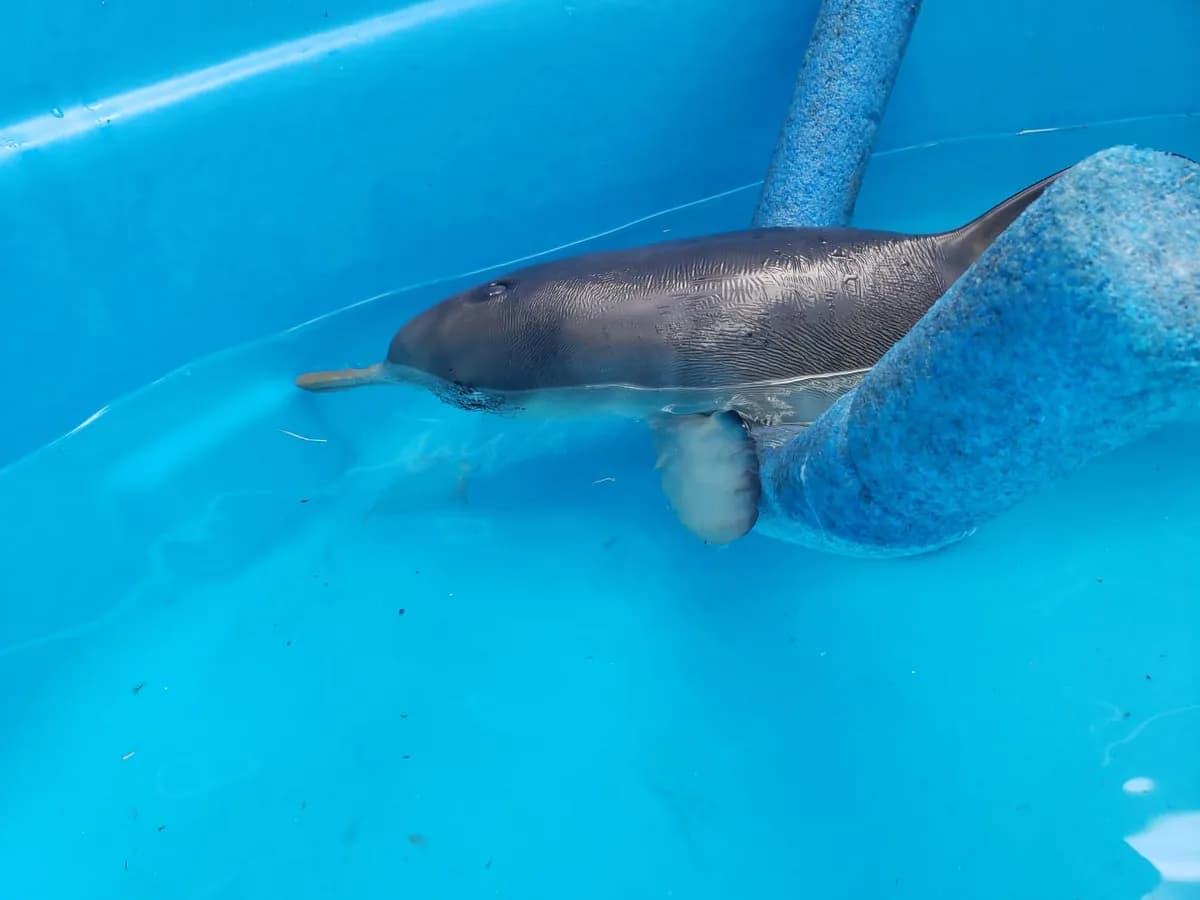
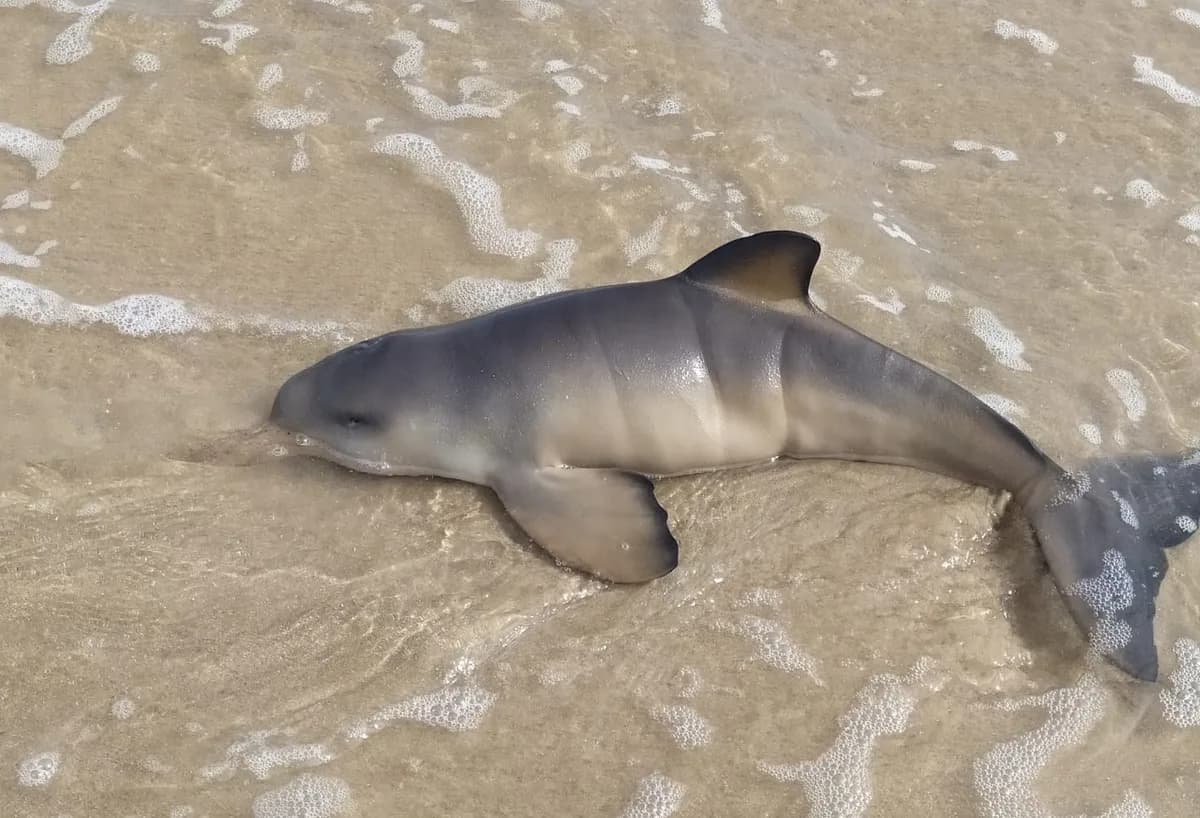
The franciscana (La Plata dolphin, Pontoporia blainvillei) off the Uruguayan coast: one of the world's five river dolphin species, and among the most threatened.

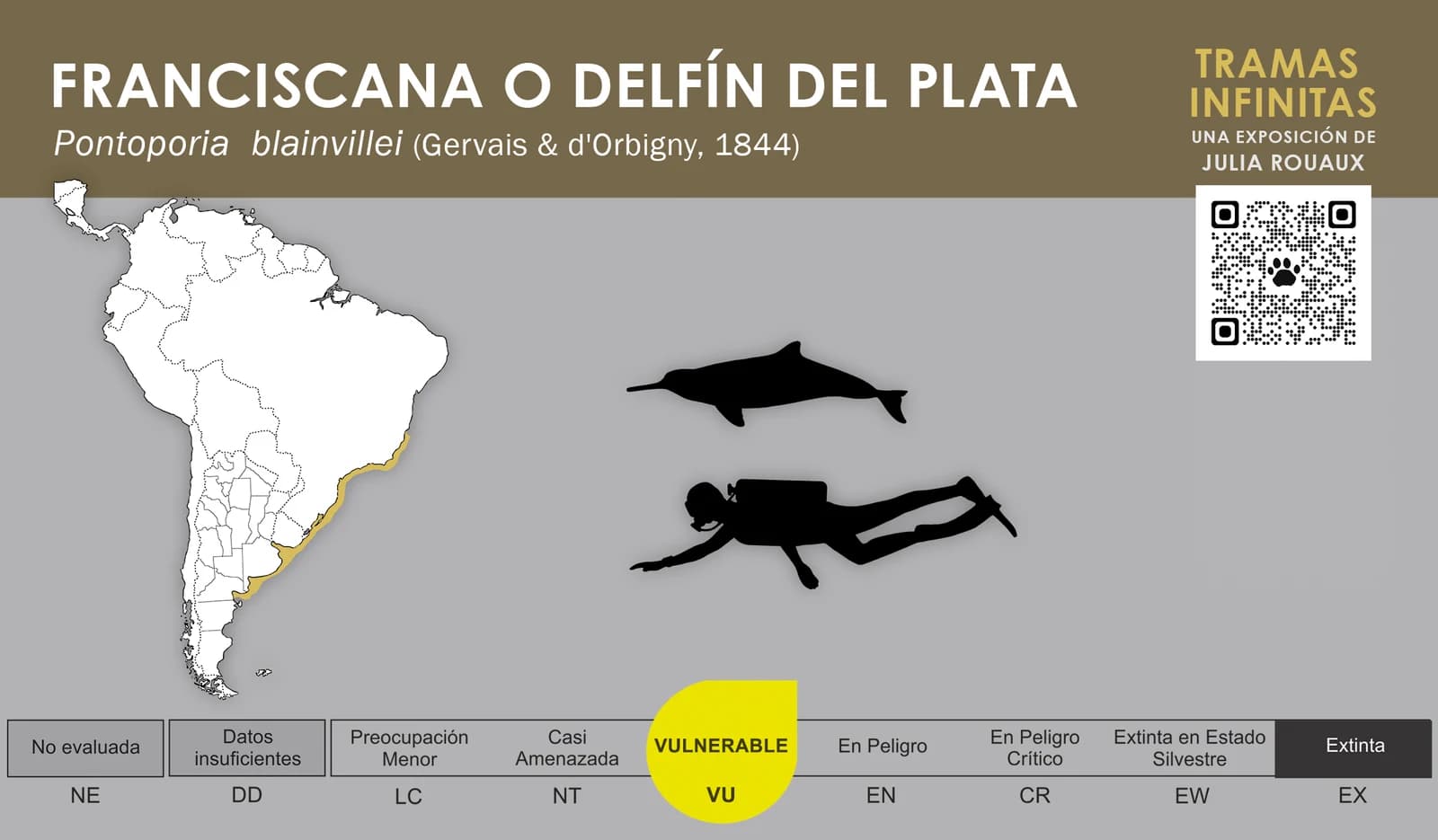
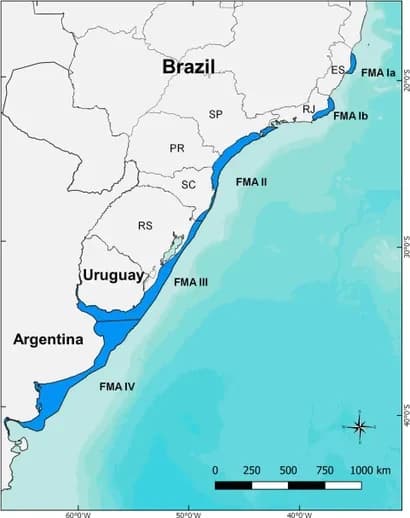
The franciscana, or La Plata dolphin, is one of the world's 5 river dolphin species and the only one that ventures into ocean waters. It is found only along the Southwest Atlantic Ocean coast, from Itaúnas, in the state of Espírito Santo (Brazil), to Golfo Nuevo on the Valdés Peninsula (Argentina). It prefers shallow waters less than 50 metres deep.
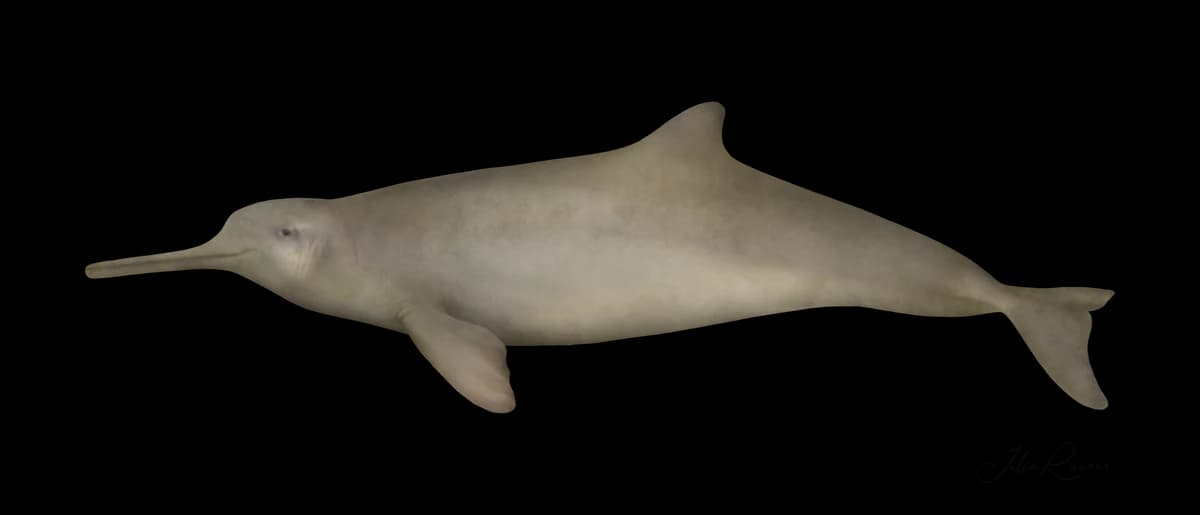
River dolphins are morphologically and physiologically distinct from marine dolphins: they have long snouts, small eyes and a body length ranging from 1.5 to 3.0 metres.
How to recognise a franciscana
The franciscana is greyish brown on the back and lighter on the belly. It has a small head and a long, narrow snout. Its dorsal fin is triangular and rounded, and its pectoral fins are paddle-shaped. It has a total of 200 small, uniform teeth, which it uses to feed on juvenile bottom-dwelling fish such as whitemouth croaker and weakfish, squid and shrimp.
Its common name may be inspired by the colour of Franciscan friars' habits. Its scientific name, Pontoporia blainvillei, comes from the Greek ponto, referring to the open sea, and poria, from poro, passage or crossing — because it inhabits both estuaries and the sea. The name blainvillei honours the French naturalist Blainville (1777-1850).
The franciscana is a marine mammal: it is warm-blooded (it keeps its internal temperature constant), breathes through lungs, gestates and gives birth to a single calf, and nurses and cares for it over a long period of its life. Calves are born between October and February after a 10-month gestation. Nursing lasts at least 9 months, and after 2 to 3 years of life they reach sexual maturity. Franciscanas have one calf every 2 years, which can measure up to 70 cm at birth. Adult males measure between 1.2 m and 1.6 m, and females between 1.4 and 1.8 m; they weigh between 35 and 55 kg (Kasuya & Brownell 1979).
Franciscanas in the wild
The franciscana is rarely observed from the coast throughout its range. Bahía Anegada (Argentina), Rio de Janeiro and Baía de Babitonga (Brazil) are the only sites where live franciscanas and their behaviour patterns have been studied. Baía de Babitonga is home to the world's only bay-resident franciscana population, with approximately 50 individuals (Cremer and Simões-Lopes 2008; Wells et al. 2021).
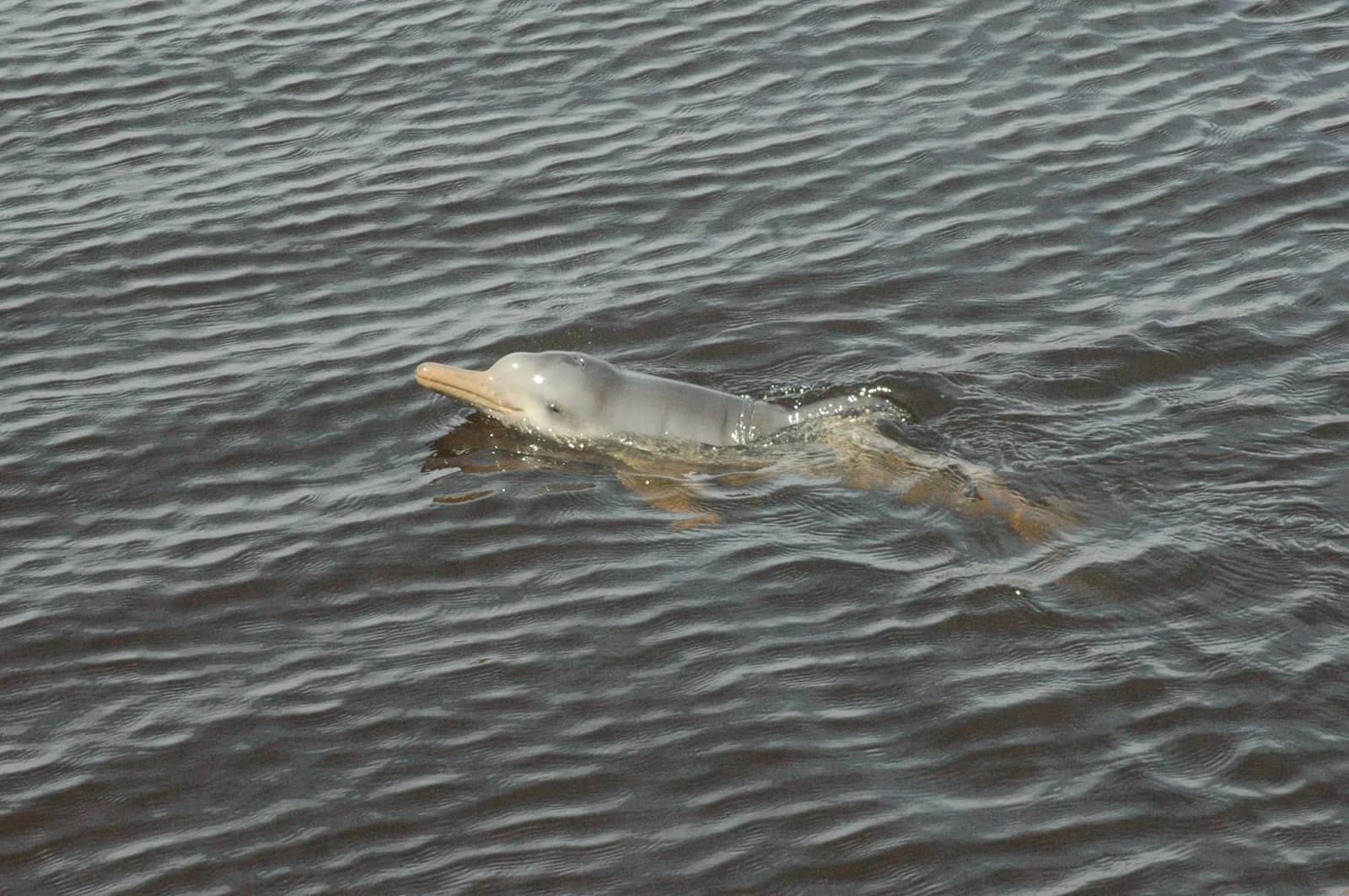
Besides its small size and cryptic colouring, which lets it blend into the water, the franciscana has discreet surfacing behaviour: it does not leap out of the water and is evasive around boats. It spends only a few seconds at the surface — just enough to breathe. It is usually seen alone, or in small groups of no more than 6 individuals.
In Uruguay there are various records of live franciscanas reported by fishers, researchers and the general public. Yaqu Pacha Uruguay is working to study the franciscana in the wild, building up sighting records and identifying the sites where it occurs most frequently, in order to carry out long-term monitoring.
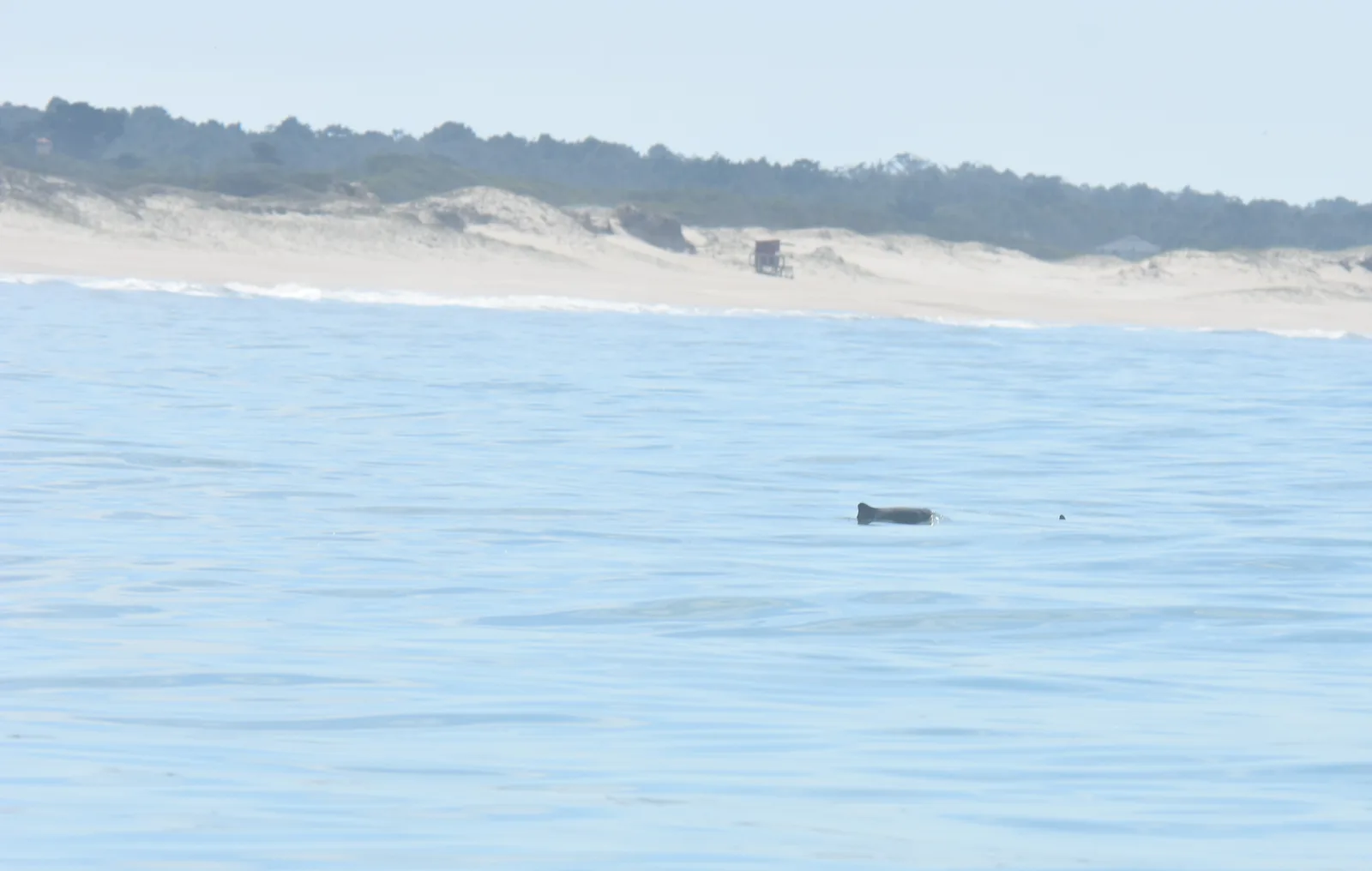
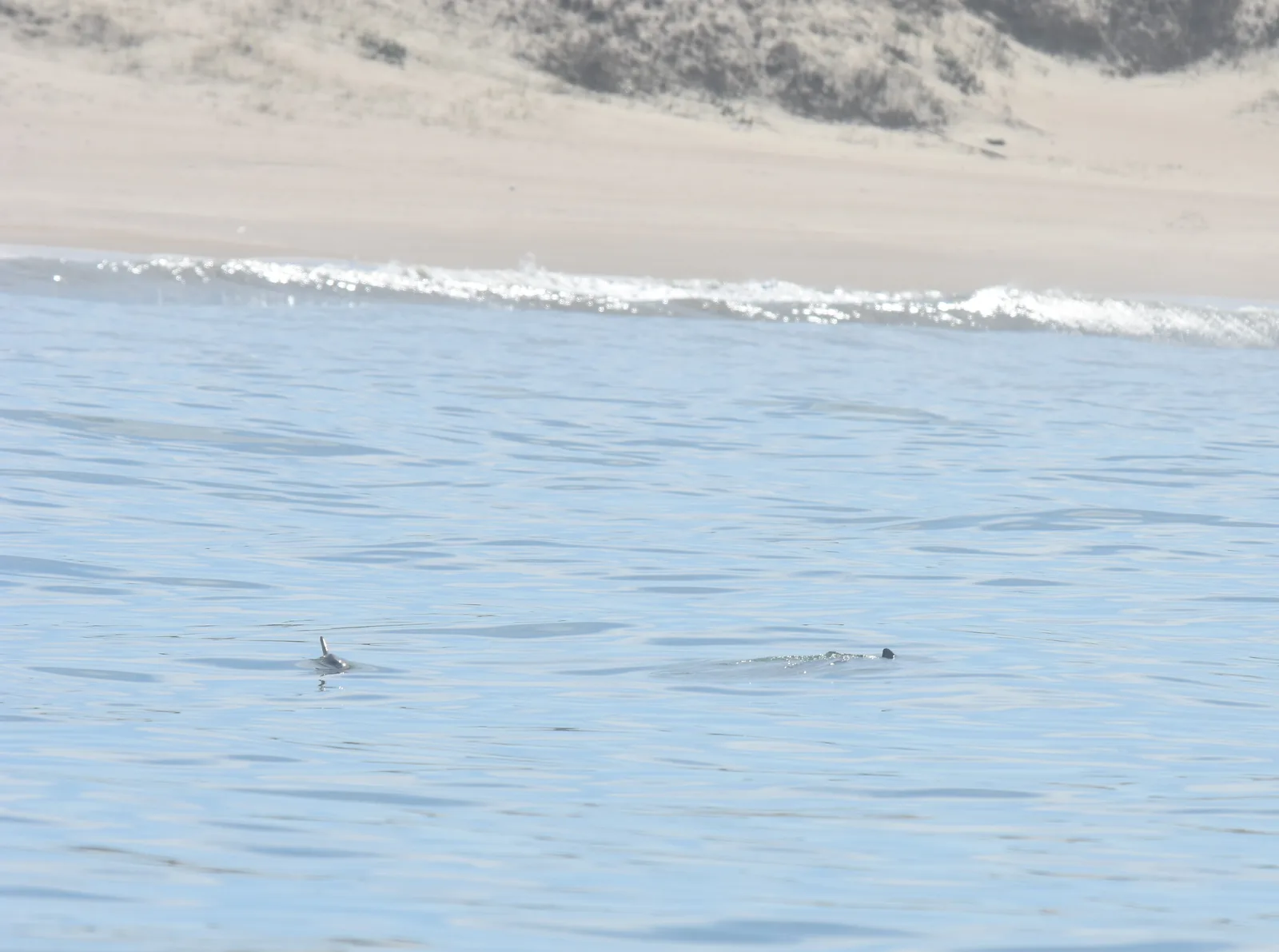
Franciscanas photographed at La Esmeralda, Rocha. Credit: Yaqu Pacha Uruguay.
How is the franciscana distributed?
Its distribution is not continuous: in southeastern Brazil there are two areas where the franciscana is absent. Five Franciscana Management Areas (FMAs) have been proposed across its range, and some of them are further subdivided into smaller areas. This was done based on scientific knowledge of its distribution, abundance, contaminant and parasite load, reproductive parameters, and morphological and genetic data.
How many franciscanas are there?
Franciscana abundance estimates are generally carried out through aerial surveys from boats, light aircraft or twin-engine planes, running transects perpendicular to the coast or in a zig-zag pattern. This applies the distance-sampling method, which measures the perpendicular distance (or angle) between the observer and the individual or group of franciscanas. Mathematical models are then used to obtain an animal density figure (number of individuals per surveyed area).
Along the Uruguayan coast, an estimated total of 30,000 franciscanas has been calculated (Sucunza et al. 2023). In southern Brazil, about 13,000, and along the Argentine coast about 14,000. In southeastern Brazil, an estimated 10,000 franciscanas (Secchi et al. 2021). It seems like a lot, but when bycatch mortality is taken into account, more franciscanas are dying than are being born.
Bycatch
Franciscanas become incidentally entangled in artisanal and industrial fishing nets throughout their range. This causes them to drown and, in many cases, wash up stranded on the beach. Various studies have been carried out to reduce this bycatch — sound-emitting alarms (pingers) to scare them away, changes to net material, plastic bottles attached to nets to make them more detectable — but effective fishing management measures to reduce catches have not yet been achieved.
It is a species listed as Vulnerable on the IUCN Red List of Threatened Species (International Union for Conservation of Nature), based on a suspected decline of 30% over three generations — which is expected to increase due to expanding fisheries and the lack of mitigation measures.
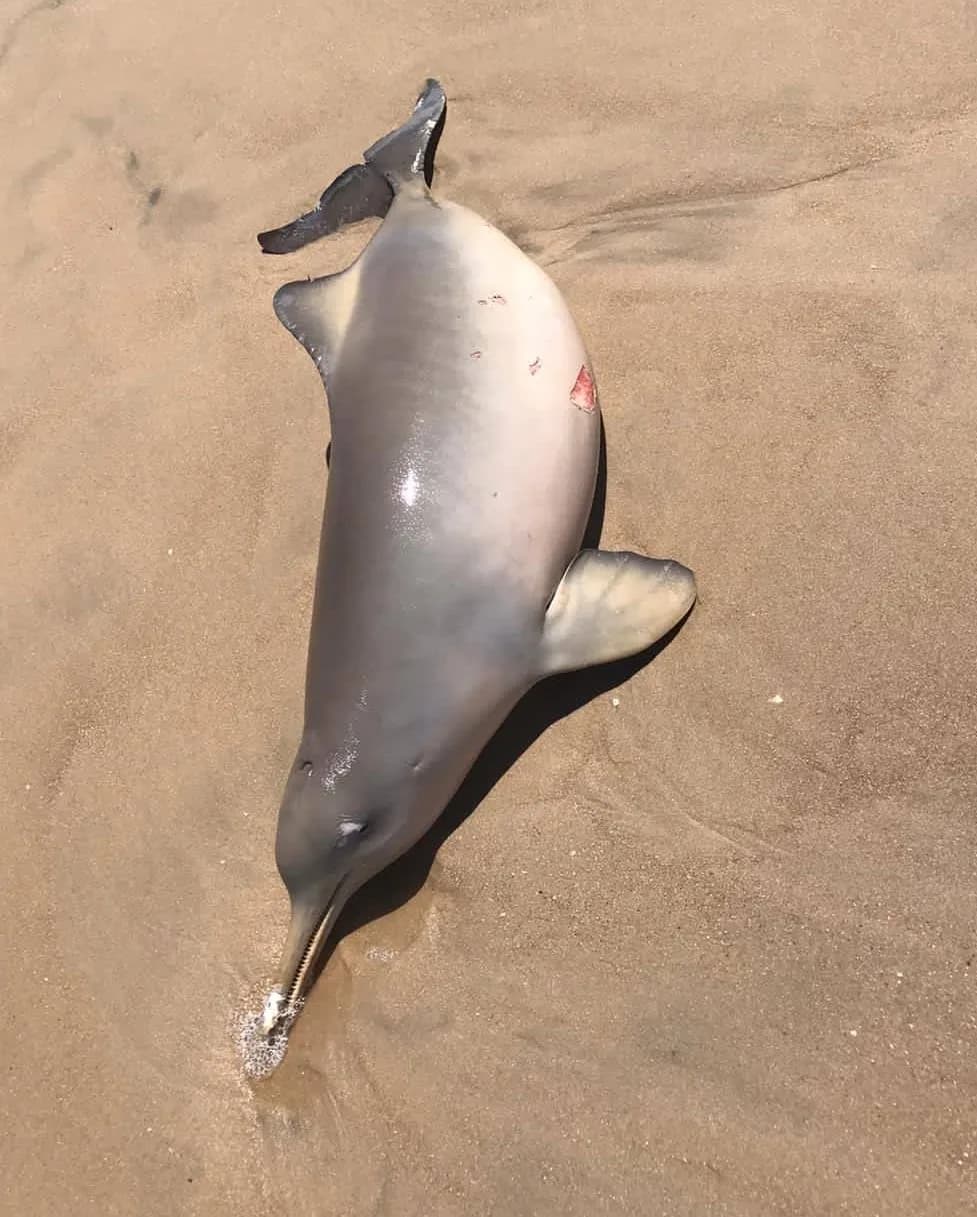
When animals strand alive, as most often happens with the franciscana (Pontoporia blainvillei), we work with the team from the Alliance for Franciscana Dolphin Research, Rescue, Rehabilitation and Conservation (AFC3R). This group's members are more than 30 aquatic mammal professionals — veterinarians, biologists and rehabilitation specialists from Brazil, Uruguay, Argentina, the USA and Germany — with long experience handling small cetaceans (Meegan et al. 2022).
For more information about the Alliance, visit yaqupacha.de/es/proyecto-la-plata-delfin.
This Alliance was created in 2019 in response to the high number of live franciscana strandings in South America. This small dolphin species lives exclusively in the coastal waters of Brazil, Uruguay and Argentina, and is today one of the most threatened dolphin species in the region, along with the tonina, or Lahille's bottlenose dolphin (Tursiops truncatus gephyreus).
Over the last 20 years, the number of live franciscana strandings recorded in a small part of the species' full range has been more than 133 animals (Meegan et al. 2022). What's striking about these stranded animals is that more than 96% are very young, particularly newborn calves.
A first step was establishing protocols for handling live neonatal, juvenile and adult franciscanas, based not only on many years of experience but also on scientific evidence. Each live franciscana stranding is therefore handled collectively, with expert guidance and systematic recording of the actions taken.